Easy Recipe Today
Chocolate Roll Cake with Whipped Ricotta Cream
From the Easy Recipe Today kitchen
141calories
8 gprotein
18 gnet carbs
74 mgsodium
35 minhands-on
≈ £0.45 per servingestimated from UK store prices
A light chocolate sponge rolled around whipped ricotta cream with vanilla and orange zest, dusted with cocoa.

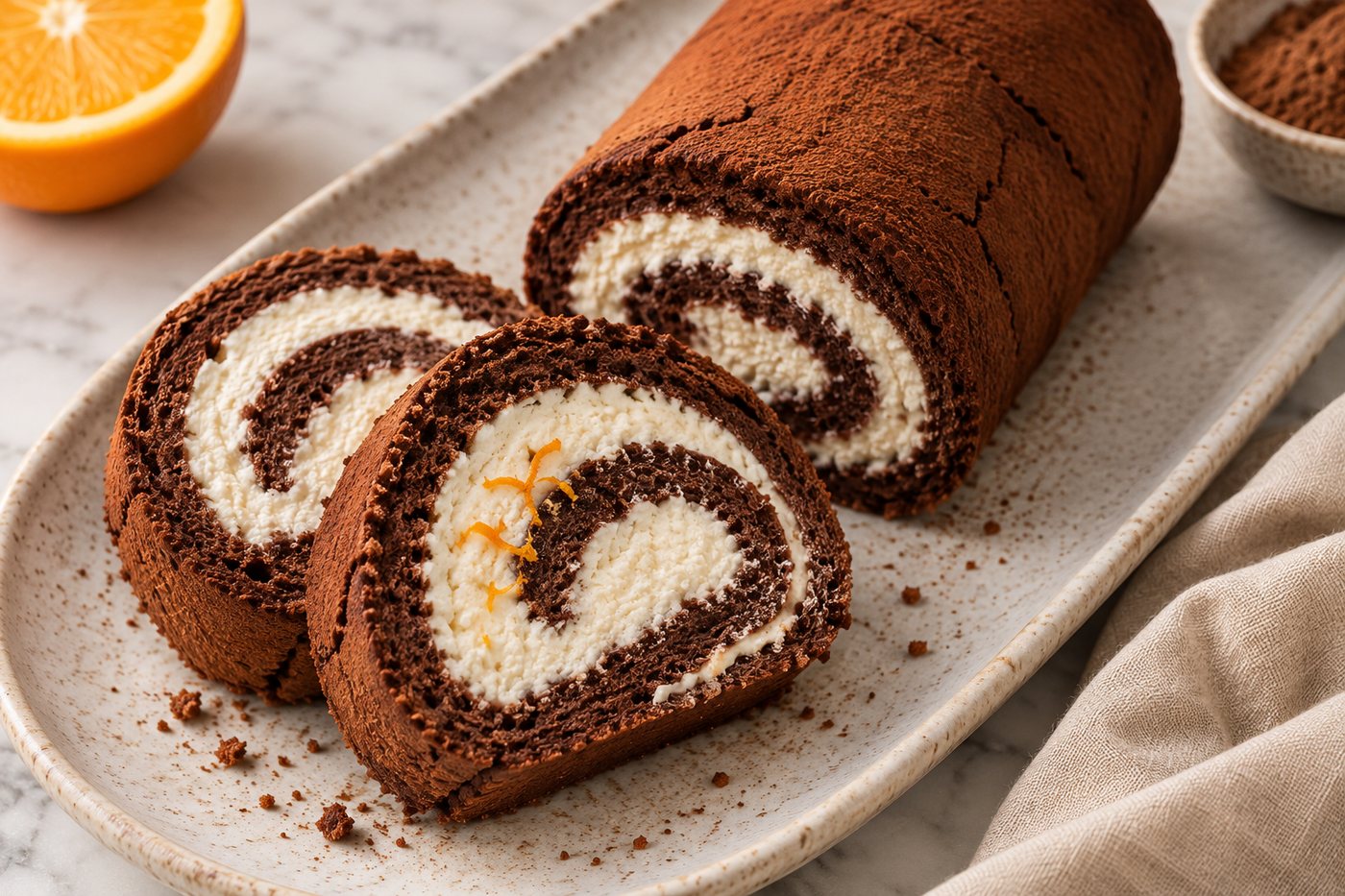
Made for a crowd
One batch gives 10 servings, enough to pass round the table.
Numbers you can cook to
141 kcal and 18 g of net carbs per serving, worked out from the USDA food tables.
35 minutes of work
Plus 2 hours of chilling.
The recipe
Chocolate Roll Cake with Whipped Ricotta Cream
Prep 25 minOven 10 minChill 2 hrsHands-on 35 minServes 10
Ingredients
Method
- Heat the oven to 175°C (350°F) and line a 10x15-inch (25x38 cm) rimmed sheet with parchment. Beat the egg whites with the salt to soft peaks, then add the sugar a spoonful at a time and beat until glossy and the peaks stand straight, 3–4 minutes.
- Stir the yolks together and fold them into the whites, then sift the cocoa and flour over and fold with a spatula, in as few strokes as it takes, until no streaks remain. Every extra stroke knocks out air, and a flat sponge cracks when you roll it.
- Spread the batter into the corners and bake until the top springs back when touched and the edges just pull away, 9–10 minutes. Two minutes too long and it dries out and splits.
- Straight away, turn the sponge out onto a clean kitchen towel, peel off the paper and roll it up from a short side with the towel inside. Leave it rolled to cool completely, about an hour: rolled warm it remembers the shape, rolled cold it breaks.
- Meanwhile, whip the ricotta with the yogurt, maple syrup, vanilla and orange zest in a food processor until smooth and thick, 1 minute, and chill it.
- Unroll the sponge, spread the cream to within an inch (2.5 cm) of the far edge and roll it up again without the towel. A few small cracks on top are normal — the cocoa hides them. Chill it seam side down for at least an hour, then dust with cocoa and slice with a hot knife.
KeepKeeps 3 days covered in the fridge. Does not freeze: the ricotta cream turns grainy as it thaws.
SwapThe sugar holds the beaten whites up, so it stays: cut it and the sponge sinks and cracks. No ricotta? Use all Greek yogurt — the cream comes out tangier and softer, so chill the roll 2 hours before slicing.
Nutrition per serving
Worked out from the ingredient list, line by line, with the USDA food tables. How we count.
141Calories
8 gProtein
19 gCarbs
18 gNet carbs
1 gFibre
5 gFat
13 gSugars
74 mgSodium

Get this recipe in your inbox
We send it now, so it is with you at the shop and at the stove.
Free: 7 dinners, one shopping list. No deciding at 6pm.Get the free planNew: this week’s dinners by email, every Monday
More like this
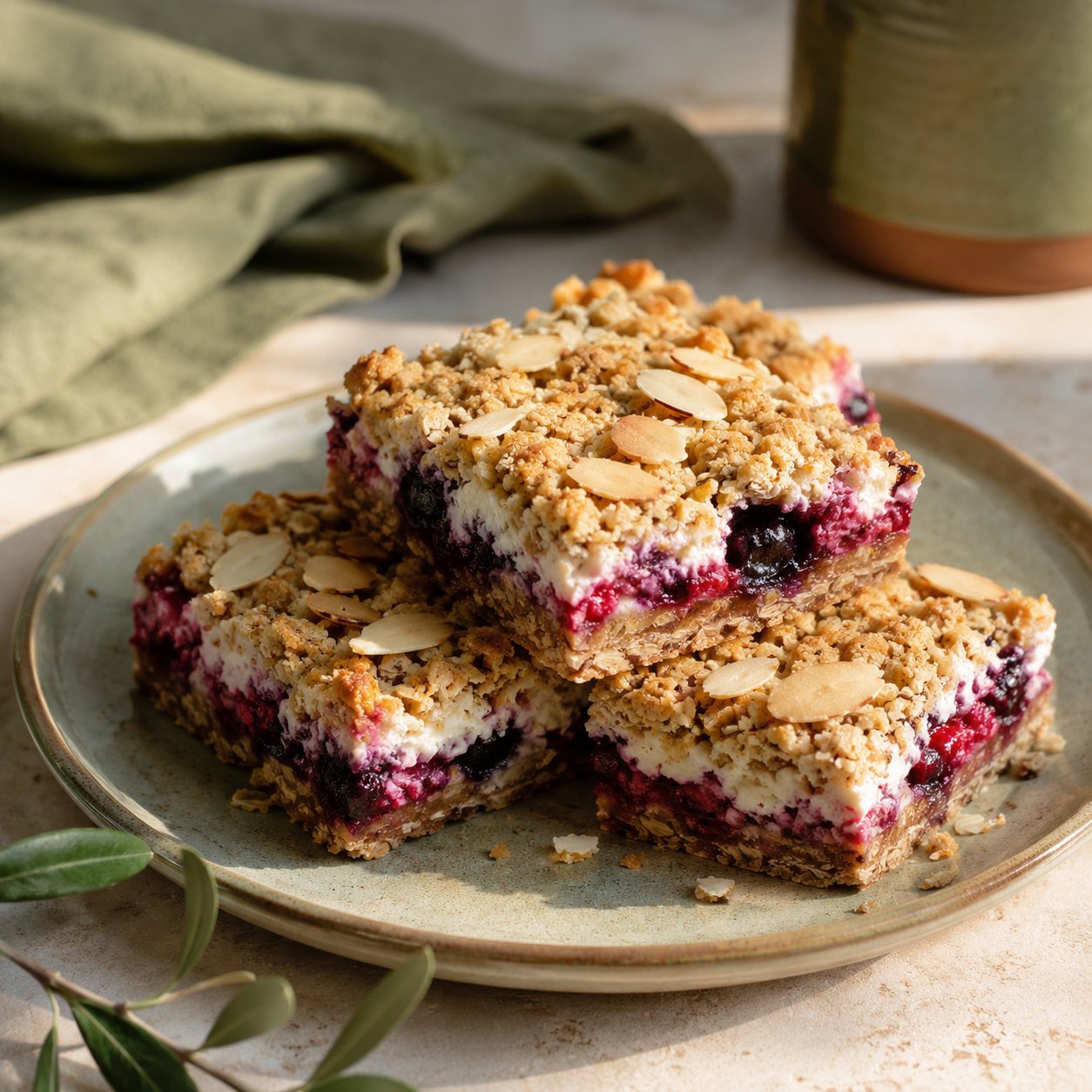
Almond & Berry Crumble Bars
34 g net carbs · 326 mg sodium
30 g+ protein
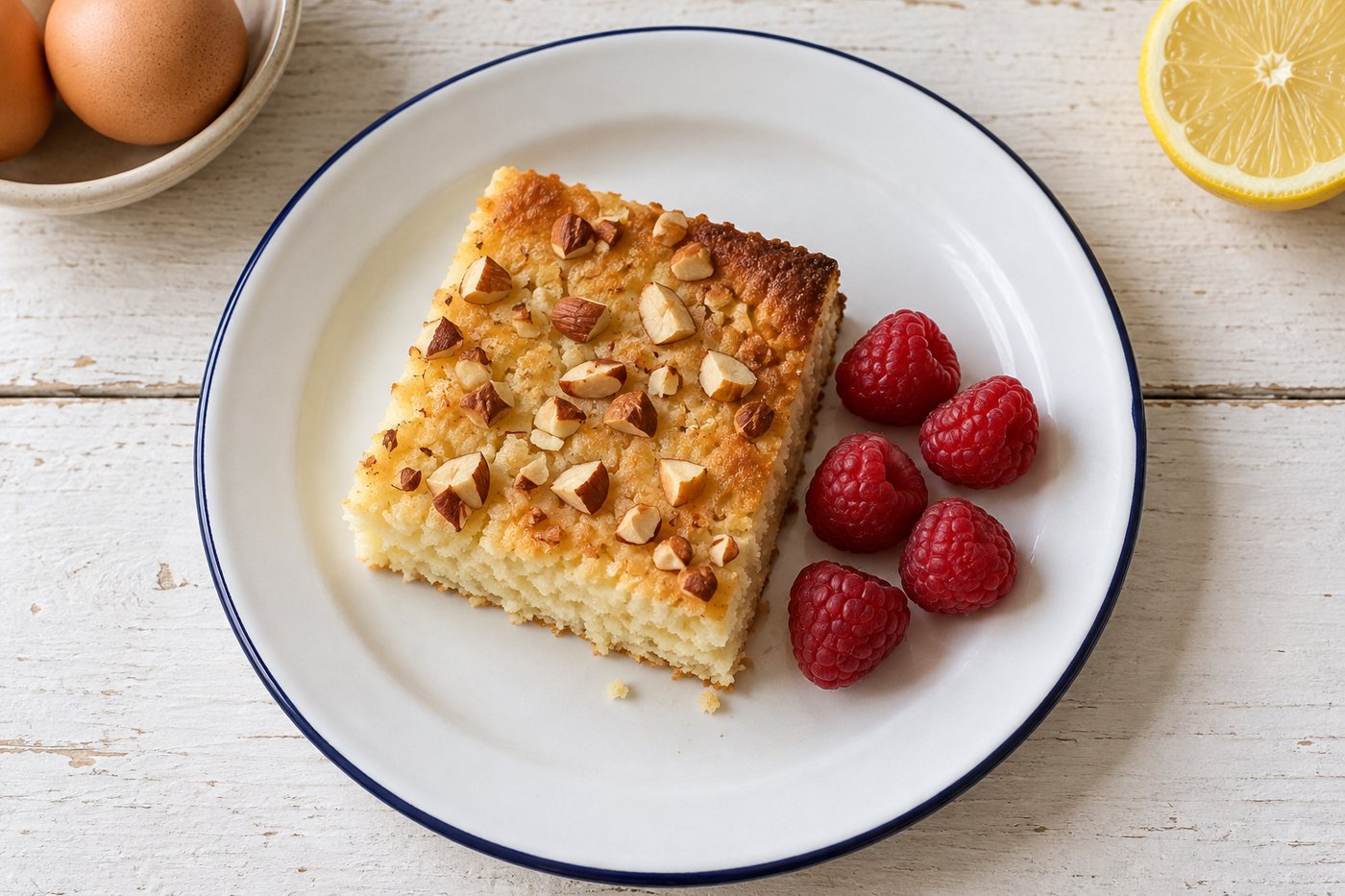
Almond & Ricotta Cake with Lemon Zest
7 g net carbs · 205 mg sodium
under 10 g net carbsunder 300 mg sodium
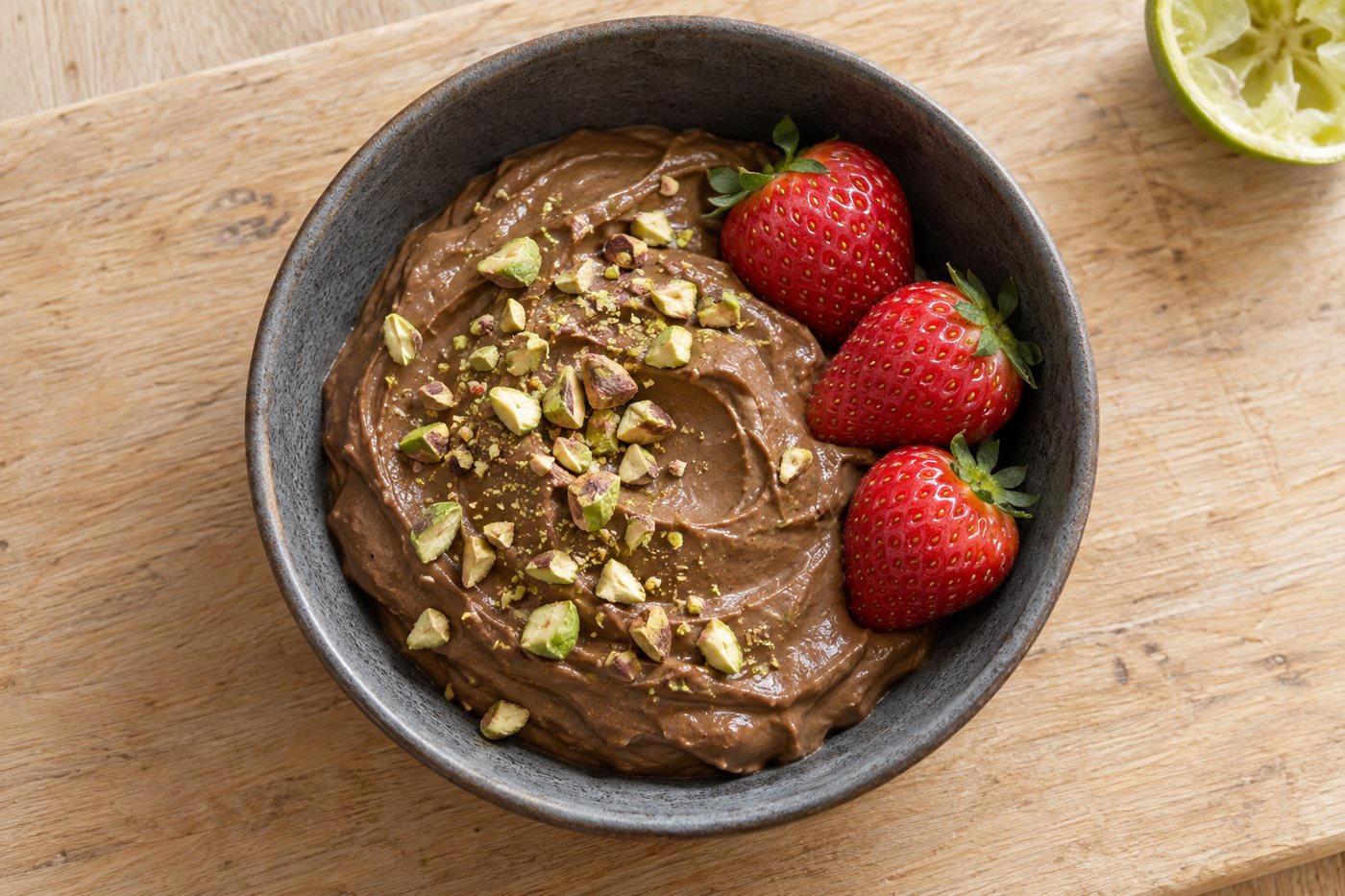
Avocado-Lime Mousse with Pistachios and Cocoa
13 g net carbs · 35 mg sodium
under 20 g net carbsunder 300 mg sodium
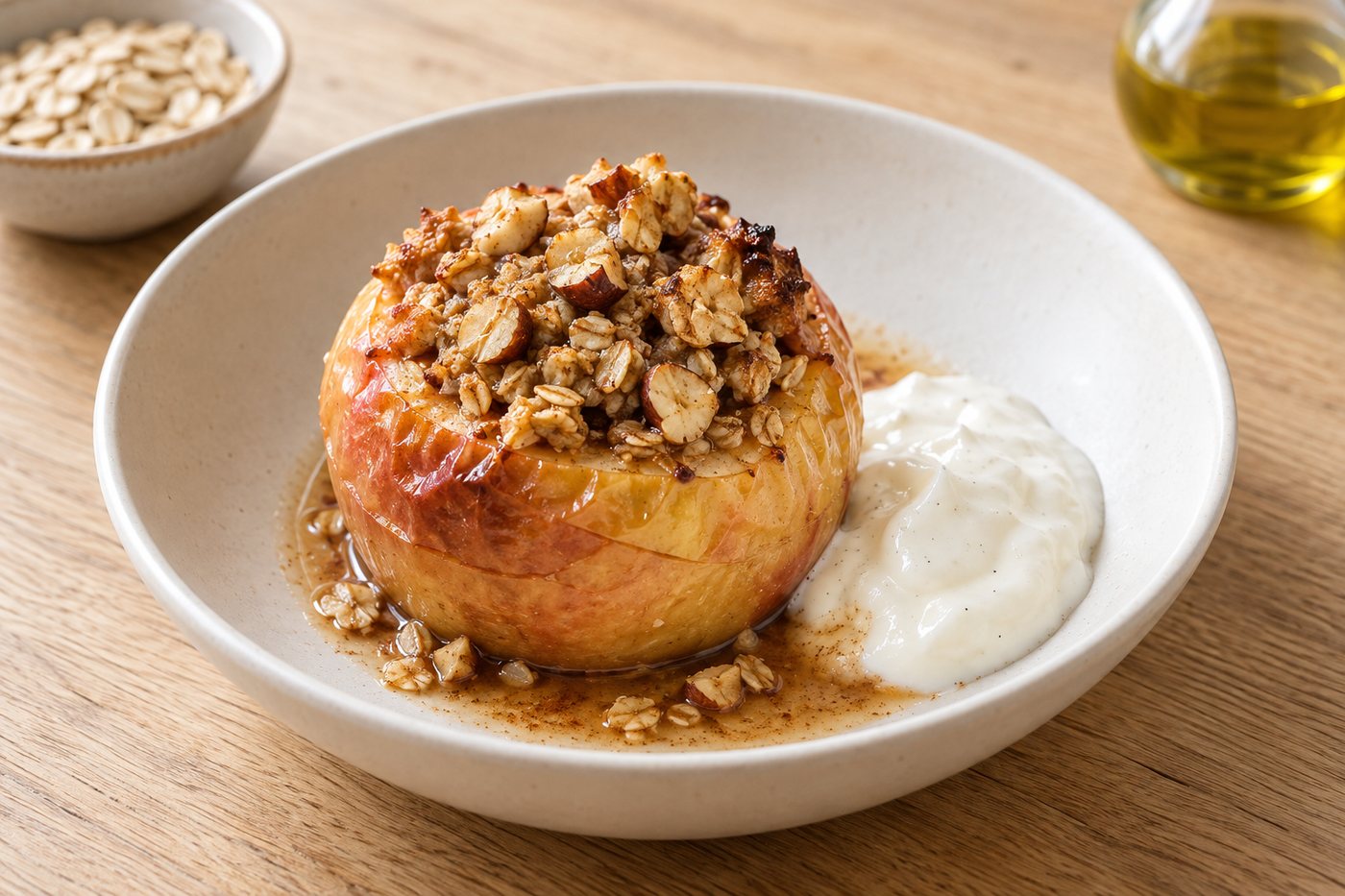
Baked Apples with Hazelnuts, Oats & Cinnamon
29 g net carbs · 30 mg sodium
under 300 mg sodium